← Grant Mortimer

Acquisition · CD Baby · 2023

Redesigning signup to get more artists in the door

I co-led this with Growth Marketing. We turned a 15-field, single-page form into a short, multi-step flow with email verification, then guided new users all the way to checkout.

+14%

New accounts per day

Average daily signups, before vs. after

+9%

Paying customers

Accounts that paid within 30 days of signup

Role
Growth PM, co-led with Growth Marketing
Team
Design, Engineering, QA, Data Science
Stakeholders
Support, Trust & Safety, Legal
Baseline
18% signup conversion

Context

CD Baby gets independent artists' music onto every streaming platform.

Signing up and starting a release is free. Artists pay a one-time fee to finalize and distribute it.
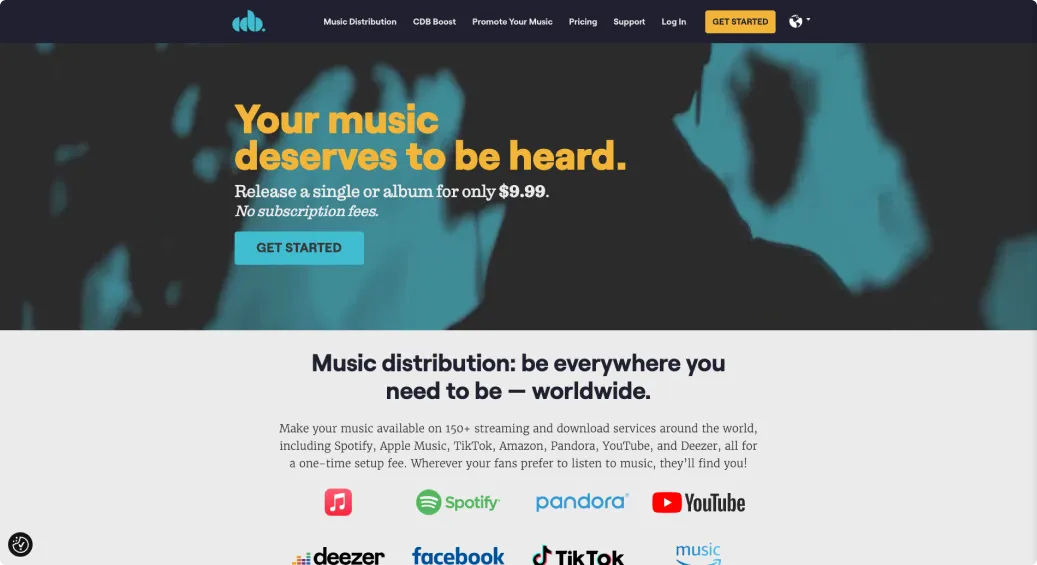
The CD Baby marketing homepage

Before

One giant page, 15 fields, and no email verification.

Every field we asked for up front was another reason to leave.

  1. Confirm email was redundant. People just copy-paste it.
  2. Company was optional but looked required.
  3. Address line 2 broke the flow of the form.
  4. Phone number was required, a high-friction ask.
  5. Username was one more thing to invent and remember.
  6. Confirm password added friction a show/hide toggle solves.
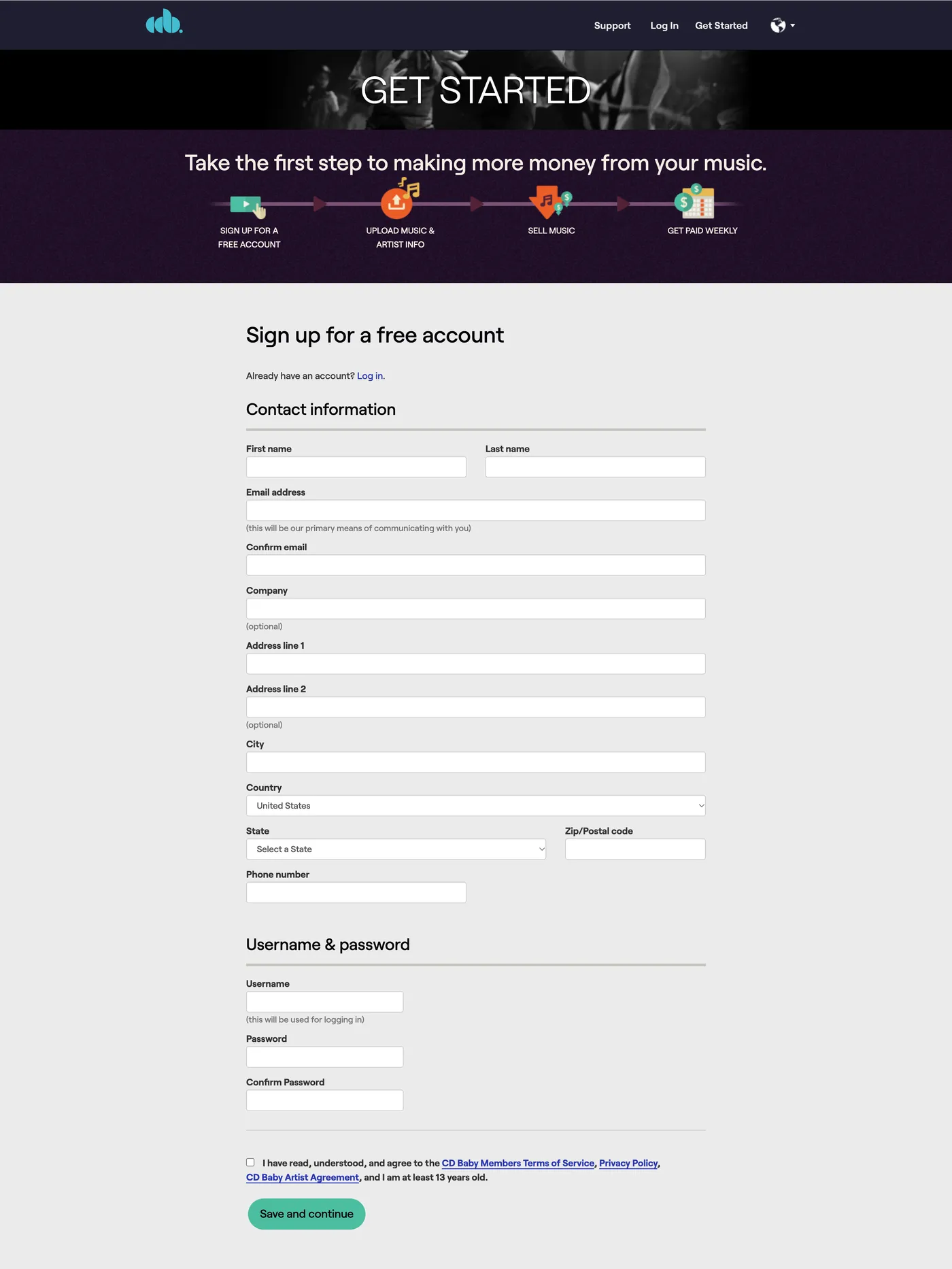
Old signup form
The old single-page CD Baby signup form with 15 fields

Benchmark

At 18%, our signup conversion was in the bottom ~14% of companies Heap benchmarked.

The same research showed which form choices move conversion. We didn't need to reinvent the wheel.

Signup form conversion rates across 79 companies
Change in signup conversion by form feature
  • Offers 3rd-party sign-on+8.2 pts
  • Form split onto multiple pages+4.8 pts
  • Requires company name−3.0 pts
  • Requires job title−5.0 pts
  • Requires phone number−6.8 pts

Source: Heap, "What is a good conversion rate for your signup flow?"

Hypotheses → Roadmap

Fewer fields, more steps, verified emails.

Now

Fewer fields, multiple pages

Cut redundant fields, hide optional ones, and split the form into steps.

Later

Social sign-on

The biggest lift in the benchmark. Saved for later because it's the biggest build.

After

A short, guided path from signup to checkout.

Each step asks for one thing. Scroll through the new flow.

  1. New signup page with only email and password fields

    1Sign up

    Just one email field and a password with a show/hide toggle. No username, no confirmations.
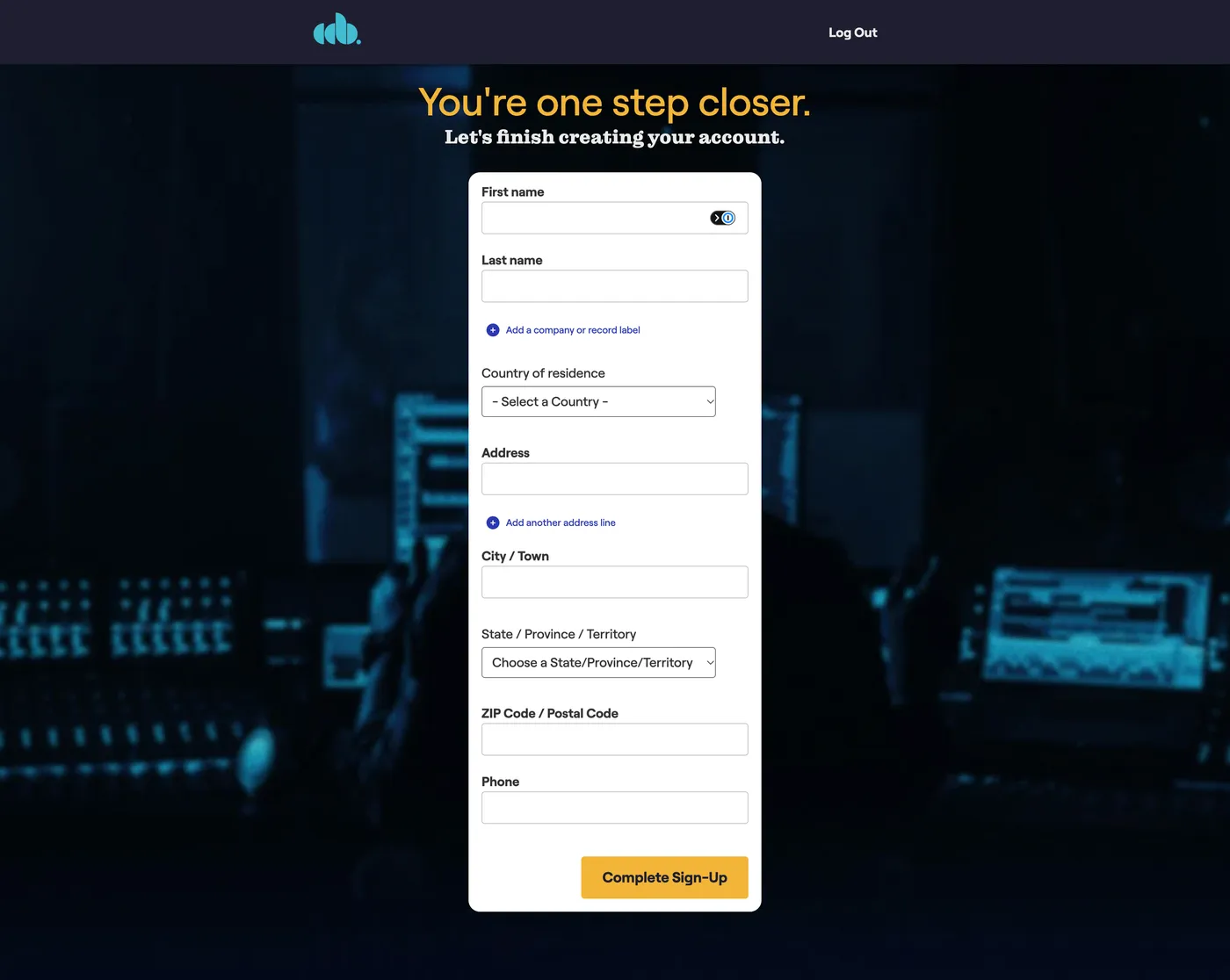
  2. Contact info step titled 'You're one step closer'

    2Contact info

    Company and address line 2 are collapsed behind links. Labels like "City / Town" work for artists around the world.
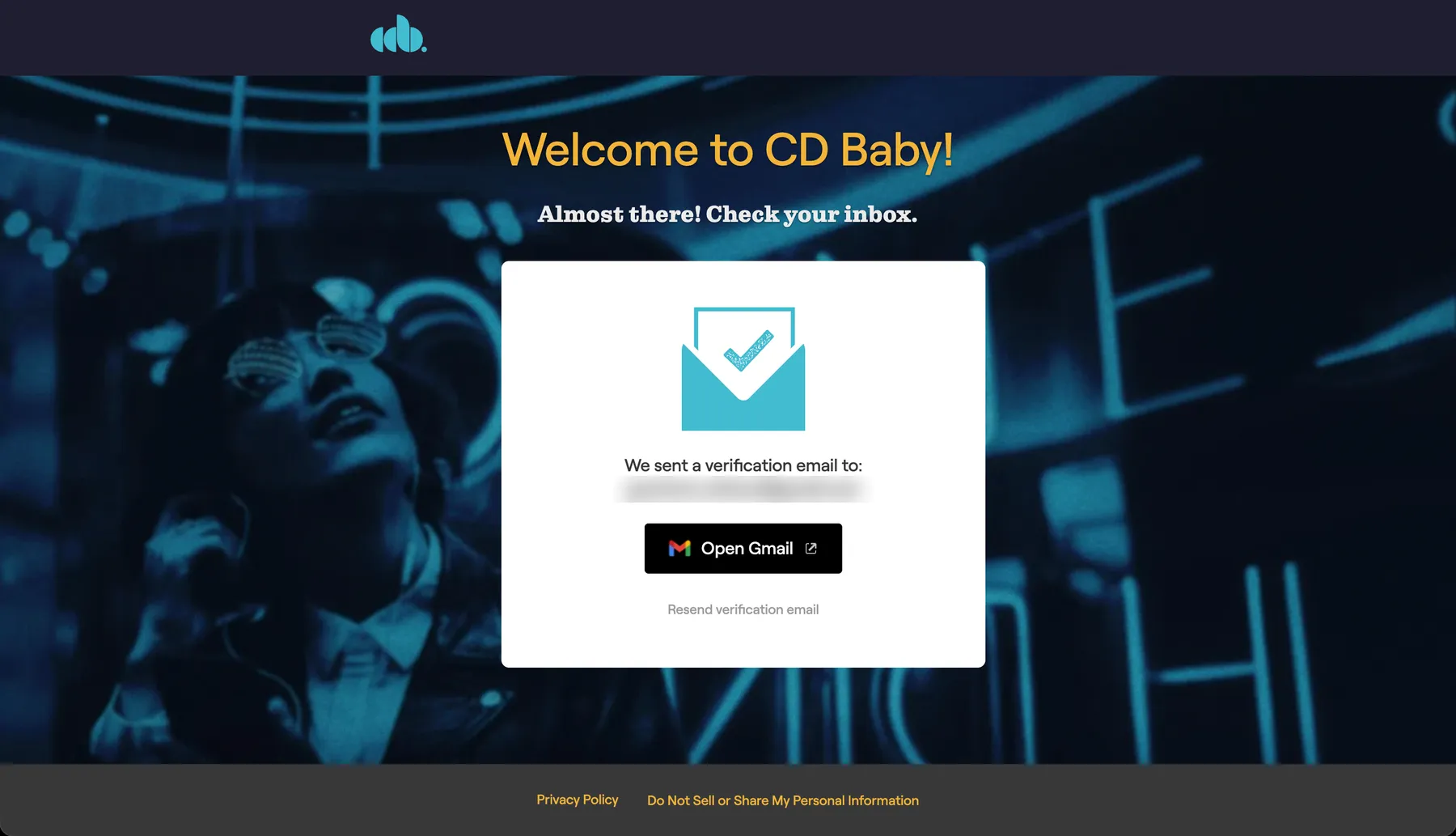
  3. 'Welcome to CD Baby! Check your inbox' page with an Open Gmail button

    3Verify email

    Verification enforced. A Gmail sniper link opens the user's inbox in one click.
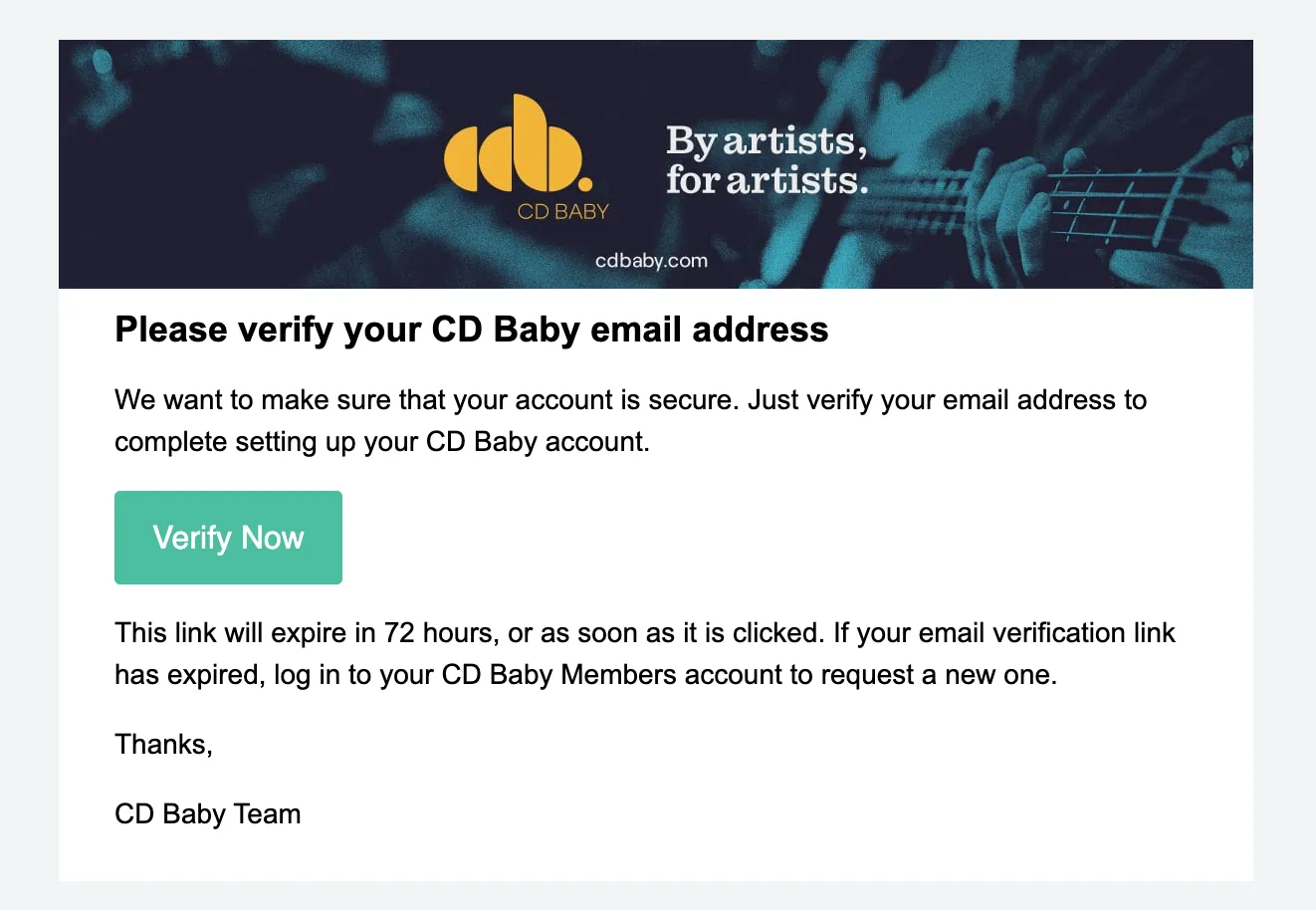
  4. CD Baby verification email with a Verify Now button

    4Verification email

    A clean email with a single call to action.
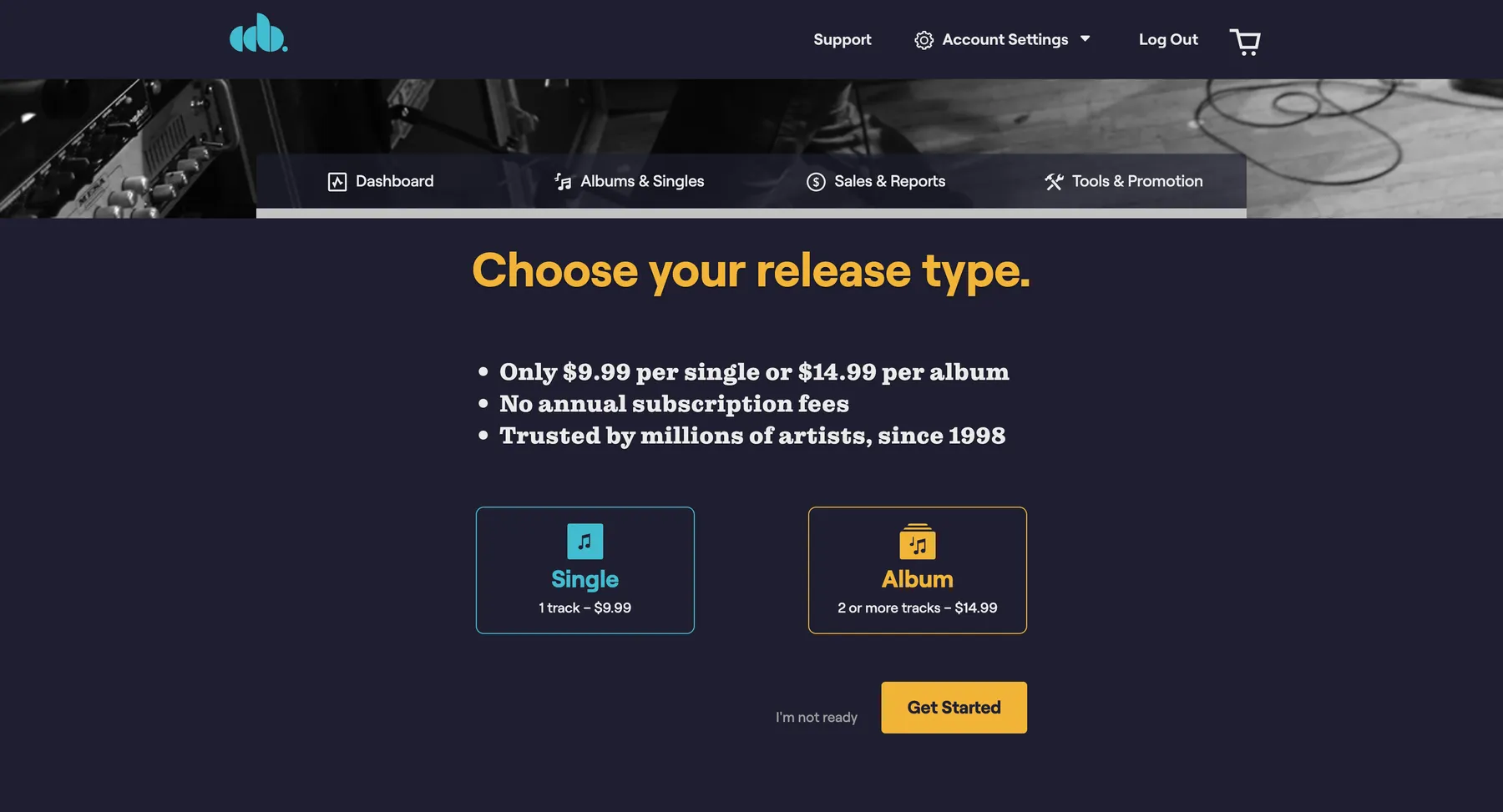
  5. 'Choose your release type' page with Single and Album options

    5Start a release

    Verified users land on a new-user release prompt, not on account settings.

    Where this came from →
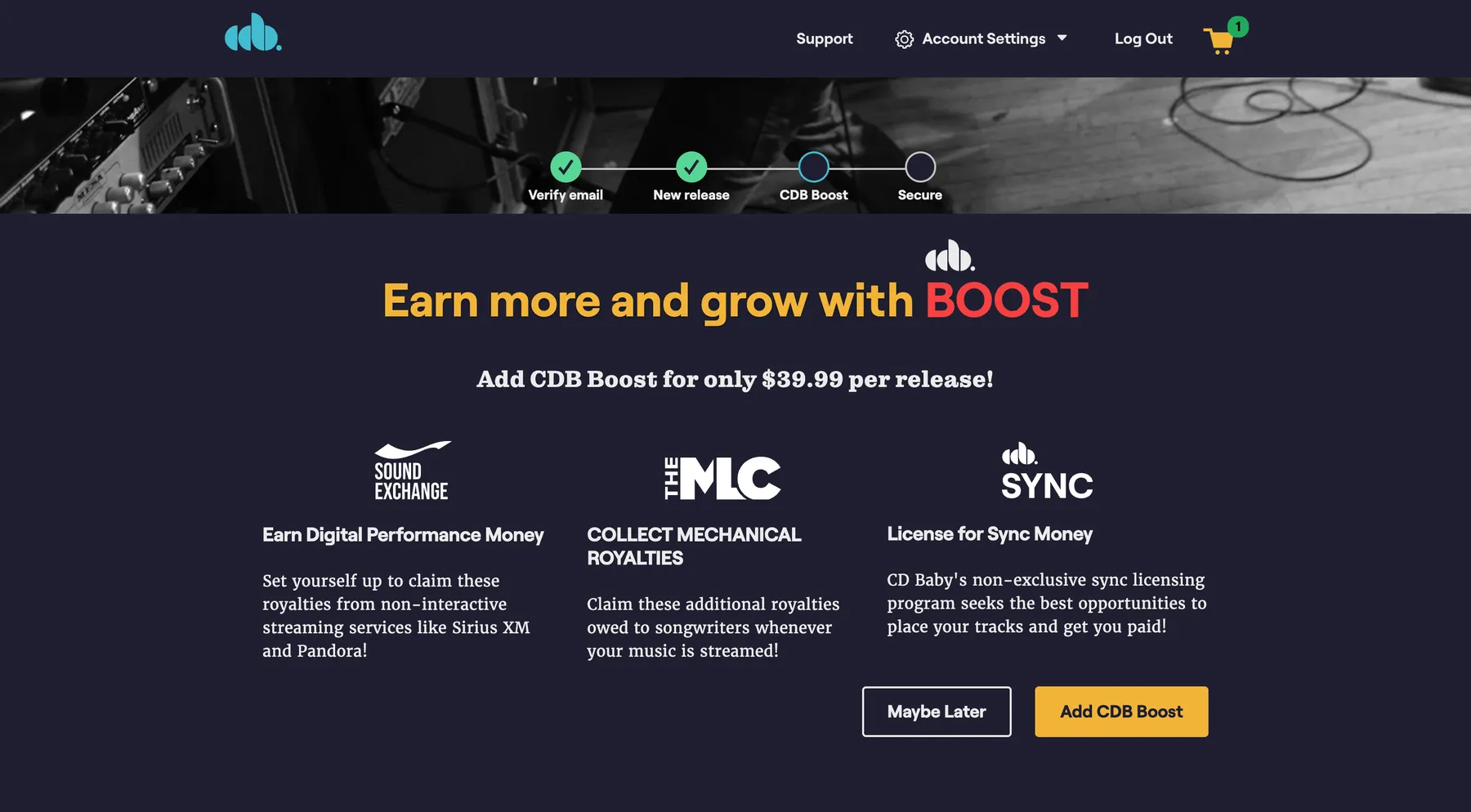
  6. Boost add-on upsell page with a progress tracker

    6Boost upsell

    A progress tracker and a relevant add-on offer in the flow.
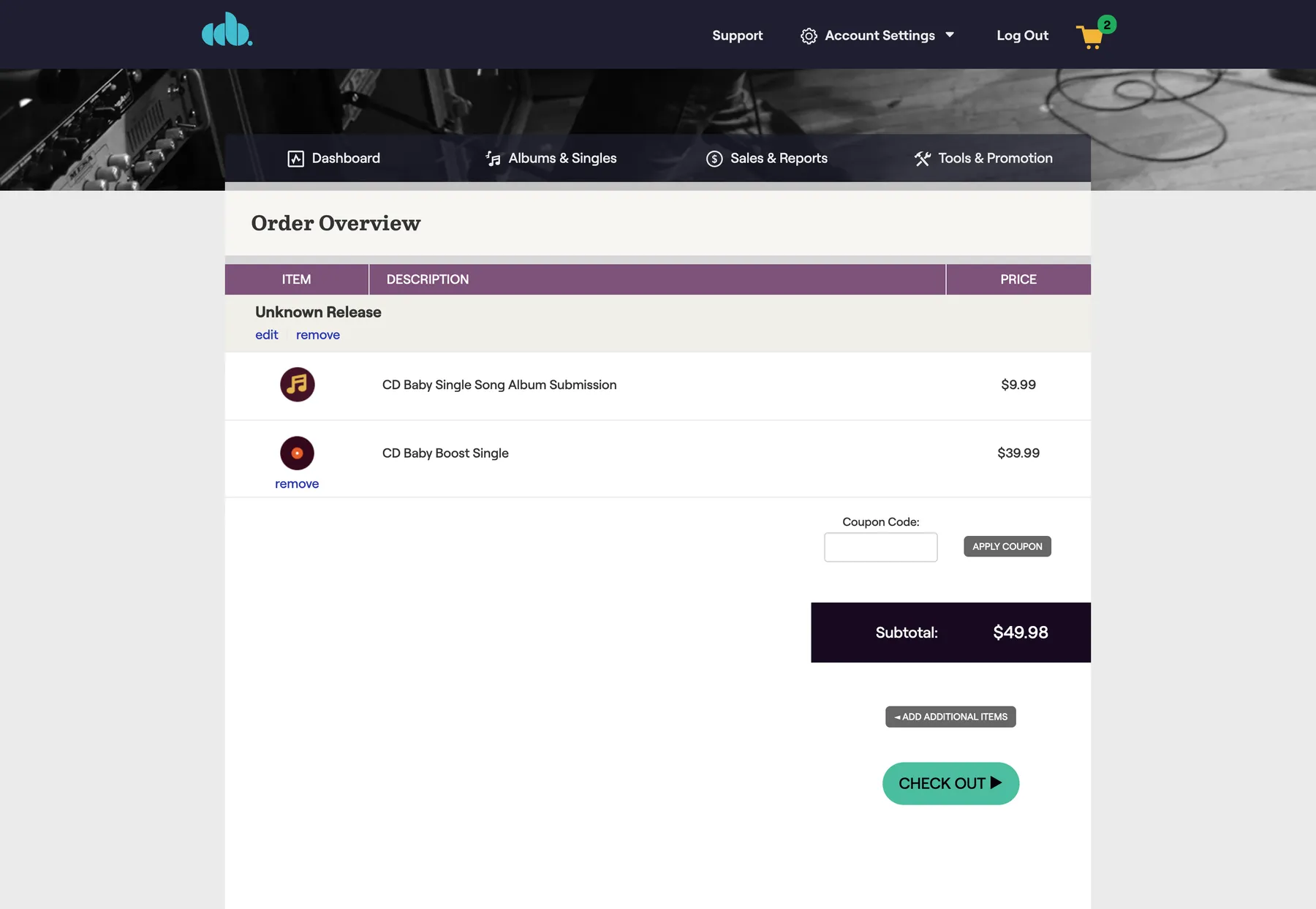
  7. Order overview cart with release and Boost line items

    7Cart

    A clear path to checkout.

Results

More new accounts and more paying customers.

We compared the old form (Aug 1 to Oct 20, 2023) with the new one (Dec 5 to 31, 2023), excluding Black Friday. About 75% of paying accounts convert within 30 days, so we measured paid conversion at 30 days.

+14%

Avg. new accounts per day

+9%

Paying customers within 30 days

−5%

30-day paid conversion rate

More signups, but more of them never paid. See below.

Reflections

What I'd do differently, and what's next.

Gate on verification

Lots of new accounts never verified, likely bots. Verification should be step 2 and required before an account exists. That would also clean up the conversion-rate dip.

Borrow proven patterns

Benchmarks and proven patterns gave us a strong backlog fast. No need to reinvent the wheel.

Test, don't just ship

This was a pre/post read, and seasonality could play a part. With A/B tooling we'd get cleaner results and could run many more of these.